
Chronic Pain
Find relief and improve your quality of life.
What is Chronic Pain?
Chronic pain is pain that persists beyond the expected period of healing — typically defined as pain lasting three months or more. It is one of the most common and most disabling health conditions in the world, affecting every area of life — work, relationships, sleep, mood, identity and quality of life.
Chronic pain is not simply acute pain that has lasted longer. It involves changes in the central nervous system — a process known as central sensitisation — in which the nervous system becomes amplified in its processing of pain signals. This means chronic pain is a genuinely different experience from acute pain, and it requires a genuinely different treatment approach.
Psychological factors play a significant and well-documented role in how chronic pain is experienced, maintained and managed. This is not to say that chronic pain is psychological in origin or that it is not real. It is real. But the brain and nervous system — which are fundamentally psychological as well as physical systems — are central to the experience of pain. Addressing the psychological dimension of chronic pain is not an alternative to medical treatment — it is an essential component of comprehensive care.
At Karasick Psychology we provide evidence-based psychological assessment and treatment for chronic pain — working collaboratively with clients and their medical teams to reduce suffering, improve functioning and support a better quality of life.
The psychology of pain
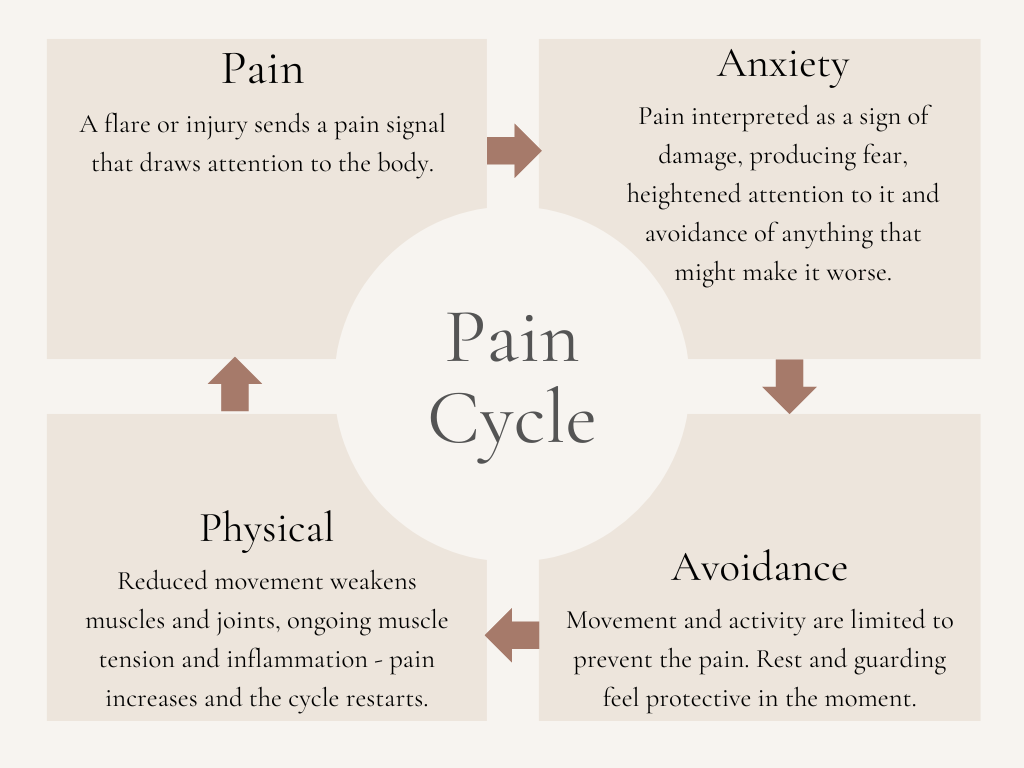
Pain is not simply a physical signal transmitted from a site of damage to the brain. It is a complex experience produced by the brain — shaped by attention, emotion, memory, expectation and meaning. This is not a metaphor. It is the current scientific understanding of how pain works.
Psychological factors including anxiety, depression, catastrophising, fear-avoidance beliefs and trauma significantly amplify the pain experience — increasing pain intensity, broadening the areas of the body affected and reducing the capacity to engage in activities that would otherwise support recovery. Addressing these factors through evidence-based psychological treatment produces real, measurable reductions in pain and improvement in functioning.
Pain catastrophizing — the tendency to magnify the threat of pain, ruminate on it and feel helpless in the face of it — is one of the strongest psychological predictors of pain chronicity and disability. It is also one of the most responsive to targeted psychological intervention.
Depression and anxiety are both causes and consequences of chronic pain. They lower pain thresholds, amplify pain signals and reduce the motivation and capacity to engage in pain management strategies. Treating depression and anxiety in the context of chronic pain is not a secondary consideration — it is central to effective pain management.
Does this sound familiar?
▪ Pain that has persisted for three months or more despite medical treatment
▪ Pain that is significantly affecting your ability to work, sleep or engage in daily activities
▪ Depression, anxiety or irritability that has developed alongside or worsened with your pain
▪ Avoiding activities for fear of worsening pain
▪ Feeling hopeless that anything will help or that the pain will ever improve
▪ Pain that fluctuates significantly with stress, mood or emotional state
▪ Difficulty accepting the reality of living with chronic pain
▪ Relationships being affected by the impact of chronic pain on your functioning and mood
▪ A sense that your identity and quality of life have been fundamentally altered by pain
▪ Feeling dismissed or not believed by medical professionals about the severity of your pain
Causes of Chronic Pain
Injury & Accident
Chronic pain frequently develops following traumatic injury — including motor vehicle accidents, workplace accidents and sports injuries. Even after physical healing has occurred the nervous system can remain sensitised, maintaining pain beyond the expected recovery period. Psychological factors including trauma, anxiety and depression significantly affect recovery trajectories following injury.
Disease & Medical Conditions
A wide range of diseases and medical conditions produce chronic pain — including fibromyalgia, rheumatoid arthritis, osteoarthritis, cancer, Lyme disease and other inflammatory and autoimmune conditions. Psychological treatment addresses the pain experience and the significant emotional burden of living with a chronic condition alongside appropriate medical management.
Surgery, Illness & Nerve Damage
Chronic pain can develop following surgery, serious illness, fractures, sprains or nerve damage — including neuropathic pain conditions where damaged nerves produce persistent pain signals. Post-surgical pain and pain following illness can be complex and require integrated physical and psychological management.
Lifestyle Factors
Sedentary lifestyle, occupational overuse, sports injuries, excess weight and the natural process of aging can all contribute to chronic pain conditions — including musculoskeletal pain, joint pain and degenerative conditions. Psychological treatment supports behaviour change, activity pacing and the management of pain-related distress alongside lifestyle modification.
Migraines & Headaches
Chronic migraines and tension headaches are among the most common and most disabling pain conditions — significantly affecting daily functioning, work and quality of life. Stress, anxiety and sleep disturbance are major triggers and maintaining factors. Psychological treatment addresses these factors and develops effective strategies for headache management and prevention.
Unknown Cause
In some cases chronic pain persists without a clearly identifiable physical cause — or despite thorough medical investigation that has not produced a clear explanation. This does not mean the pain is not real. Central sensitisation and other neurological processes can maintain pain independently of ongoing tissue damage. Psychological treatment is particularly effective for pain of unknown or complex etiology.
Pain Imprinting: The Lasting Legacy of Distress
Pain imprinting refers to the way past injuries or traumatic experiences leave enduring marks on the nervous system — persisting long after physical healing has occurred. The body can remain in a heightened state of alert, with the brain primed to overreact to future stressors. Research shows that stress hormones interact with pain receptors in ways that maintain hypersensitivity and prolong the pain response well beyond the original injury.
This imprinting is not only biological — it is psychological. Chronic pain frequently becomes embedded in identity and behaviour, reinforced by fear, avoidance and emotional exhaustion. For many people pain becomes a persistent lens through which the world is interpreted — a constant signal of threat, limitation and vulnerability that shapes every decision and interaction.
Research consistently shows that trauma survivors are significantly more likely to experience chronic physical symptoms — including headaches, joint pain and sleep disturbance — even in the absence of structural damage. The nervous system remains caught in a loop of hyperarousal, distorting perceptions of safety and amplifying the experience of pain and distress.
Understanding pain imprinting is not about questioning whether the pain is real. It is about understanding why it persists — and why addressing the psychological dimension of chronic pain is not optional but essential.
Treatment
Evidence-based psychological care for chronic pain.
Psychological treatment for chronic pain is evidence-based and highly effective — with a strong body of research demonstrating meaningful reductions in pain intensity, pain-related disability and psychological distress. At Karasick Psychology treatment is tailored to your specific pain condition, history, maintaining factors and goals.
We draw primarily from Cognitive Behavioral Therapy for chronic pain — addressing pain catastrophizing, fear-avoidance beliefs, activity pacing, sleep and the thought patterns that amplify and maintain the pain experience. Where appropriate we incorporate acceptance-based approaches that support psychological flexibility and meaningful engagement with life despite pain.
Treatment also addresses the significant emotional and psychological burden of living with chronic pain — including depression, anxiety, grief for lost functioning, identity disruption and the impact on relationships. These dimensions of chronic pain are not secondary — they are central to the experience and deserve direct clinical attention.
What to expect
Treatment begins with a thorough assessment of your pain — its history, nature, maintaining factors and impact on your life. From there therapy is collaborative, evidence-based and adjusted regularly to ensure it remains effective and responsive to your needs. We work alongside your medical team — not instead of them.