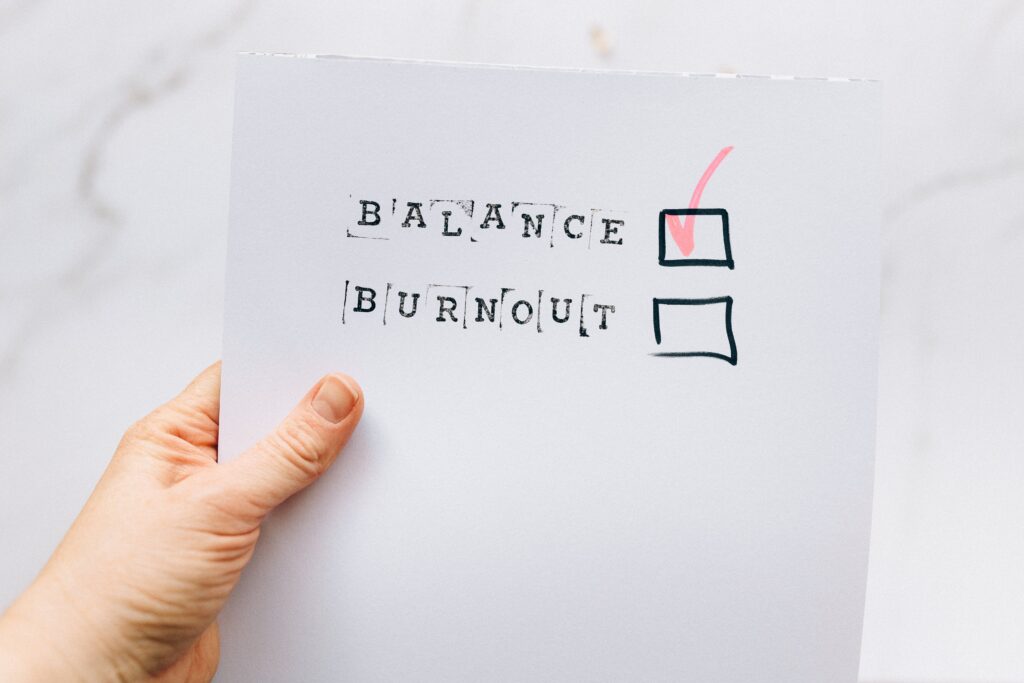
Burnout
More than exhaustion — when there is nothing left to give.
What is Burnout?
Burnout is a state of chronic physical, emotional and mental exhaustion caused by prolonged exposure to demanding, stressful or overwhelming circumstances — most commonly in the context of work, caregiving or chronic stress. It develops gradually — often unnoticed until functioning has been significantly compromised — and involves a depletion of resources that rest alone cannot replenish.
Burnout is not a sign of weakness or an inability to cope. It is the predictable result of sustained demands that have exceeded available resources for too long. High-achieving, committed and conscientious people are often at greatest risk — precisely because they push through warning signs rather than responding to them.
At Karasick Psychology we provide evidence-based assessment and treatment for burnout — helping you understand what has driven you to this point, recover your capacity and develop the skills and boundaries needed to sustain it going forward.

Does this sound familiar?
Emotional & Behavioural
▪ Emotional detachment or numbness
▪ Cynicism, irritability or resentment toward work, colleagues or responsibilities
▪ Dreading work or caregiving responsibilities that were previously meaningful
▪ Withdrawing from relationships and social connection
▪ Using substances, food or other behaviours to cope with overwhelming demands
▪ Feeling trapped, hopeless or that things will never improve
Physical & Cognitive
▪ Persistent exhaustion that is not relieved by rest or sleep
▪ Difficulty concentrating, remembering or making decisions
▪ Physical symptoms — headaches, gastrointestinal problems, frequent illness
▪ Feeling physically depleted even after time off
▪ Significantly reduced productivity despite continued effort
Types of Burnout
Burnout can develop across different life domains — each with distinct features and drivers.
Occupational Burnout
The most commonly recognised form — developing in the context of chronic workplace stress. Characterised by exhaustion, cynicism and reduced professional efficacy. Particularly common in high-demand, high-responsibility or emotionally intensive roles — healthcare, education, law, social services and corporate environments.
Common causes:
▪ Excessive workload and insufficient resources
▪ Lack of autonomy or control over work
▪ Insufficient recognition or reward
▪ Poor workplace relationships or culture
▪ Values conflict — being asked to act against personal values
Caregiver Burnout
Develops in those who provide ongoing care for others — including parents of children with complex needs, partners or family members caring for someone with chronic illness or disability, and professional caregivers. Caregiver burnout involves the particular exhaustion of giving without adequate support or respite.
Common causes:
▪ Sustained emotional and physical demands of caregiving
▪ Insufficient support, respite or recognition
▪ Neglect of own needs in service of others
▪ Grief and loss associated with the caregiving role
▪ Isolation and disconnection from personal identity outside of caregiving
Burnout from Chronic Stress
Develops in the context of prolonged life stress rather than a specific role — including financial stress, relationship difficulties, chronic illness, single parenting or sustained uncertainty. The cumulative weight of ongoing demands depletes resources in the same way as occupational burnout.
Common causes:
▪ Prolonged financial pressure or instability
▪ Relationship conflict or breakdown
▪ Chronic illness — personal or within the family
▪ Sustained uncertainty or lack of control over life circumstances
▪ Absence of adequate social support
Burnout and Depression
Burnout and depression share many features — but they are distinct conditions that require different treatment approaches.
How they are similar
Burnout and depression look remarkably alike on the surface — making accurate assessment essential before treatment begins.
Shared features:
▪ Persistent exhaustion and loss of energy
▪ Withdrawal from relationships and social connection
▪ Reduced motivation and inability to find pleasure
▪ Difficulty concentrating, remembering or making decisions
▪ Irritability, emotional numbness or feeling detached
▪ Physical symptoms — headaches, sleep disturbance, appetite changes
▪ A sense that things will never improve
How they differ
The distinction matters clinically — because the treatment approach differs significantly depending on which is driving the presentation.
Key differences:
▪ Burnout is primarily situational — driven by external demands and circumstances. Depression involves pervasive changes in mood, cognition and neurobiological functioning that extend beyond any specific situation
▪ Burnout typically improves with removal from the stressor — depression does not resolve simply by removing the stressor
▪ Burnout involves depletion of resources — depression involves dysregulation of mood, cognition and neurochemistry
▪ Burnout is domain specific — centred on work, caregiving or a specific life area. Depression is pervasive across all areas of life
▪ Hopelessness in burnout is typically situational — in depression it is global and persistent
Many people who present with burnout are also experiencing a depressive episode — and many people with depression experience burnout as a contributing or maintaining factor. A thorough clinical assessment at the outset ensures treatment addresses both dimensions where relevant.
Treatment
Recovery, restoration and sustainable change.
Recovery from burnout requires more than rest — though rest is an essential first step. At Karasick Psychology treatment begins with a thorough assessment of the factors that have driven burnout — workload, values conflict, boundary difficulties, perfectionism, underlying anxiety or depression — so that treatment addresses the root causes rather than just the symptoms.
We draw primarily from Cognitive Behavioural Therapy — addressing the thought patterns, beliefs and behaviours that contributed to burnout and developing the skills, boundaries and self-awareness needed to prevent recurrence. Biofeedback can be integrated to support nervous system recovery and regulation — addressing the physiological depletion that is central to burnout.
Treatment also addresses the emotional dimensions of burnout — including grief for lost capacity, identity questions that arise when work or caregiving roles have defined you, and the process of reconnecting with meaning, values and a sustainable sense of self.
What to expect
Treatment begins with a thorough assessment of your burnout — its history, drivers and current impact. From there therapy is collaborative and paced to your current capacity. Recovery from burnout is real and achievable — with the right support most people experience meaningful improvement within 8-16 sessions.