
Somatic symptom and related disorders
Physical symptoms with psychological roots - real, complex and treatable.
What are Somatoform Disorders?
Somatoform disorders are a category of conditions characterised by physical symptoms that cause significant distress or impairment — where psychological factors play a central role in the development, maintenance or exacerbation of those symptoms. The physical symptoms are real and genuinely experienced. They are not fabricated, imagined or deliberately produced.
The relationship between physical and psychological experience is bidirectional and inseparable. Psychological distress produces real, measurable physical symptoms — and real physical symptoms produce significant psychological distress. In somatoform disorders this relationship becomes a self-reinforcing cycle that maintains and amplifies suffering beyond what the underlying physical condition alone would produce.
At Karasick Psychology we provide evidence-based psychological assessment and treatment for somatoform disorders — working collaboratively with clients and their medical teams to address the psychological factors maintaining distress and impairment.

Somatoform Disorder Types
Somatoform disorders encompass a range of conditions where physical and psychological experience are closely intertwined.
Somatic Symptom Disorder
Characterised by one or more physical symptoms causing significant distress — accompanied by excessive thoughts, feelings or behaviours related to those symptoms. The symptoms are real. What distinguishes this condition is the disproportionate and persistent focus on symptoms and their meaning, which significantly amplifies distress and impairment.
Key features:
▪ Real physical symptoms causing significant distress
▪ Excessive and persistent worry about symptom severity or meaning
▪ Constant body monitoring and symptom evaluation
▪ Medical reassurance that provides only temporary relief
▪ Symptoms that fluctuate with stress or emotional state
Illness Anxiety Disorder
Previously known as Hypochondria. Characterised by excessive preoccupation with having or developing a serious illness in the absence of significant physical symptoms. The anxiety centres on the possibility of illness rather than the experience of symptoms — though physical sensations are frequently misinterpreted as evidence of disease.
Key features:
▪ Persistent fear of having a serious undiagnosed illness
▪ Excessive body checking or medical reassurance seeking
▪ Medical appointments that provide only temporary relief
▪ Researching symptoms that amplifies rather than reduces anxiety
▪ Significant preoccupation with health that interferes with daily functioning
Functional Neurological Symptom Disorder
Previously known as Conversion Disorder. Characterised by neurological symptoms — weakness, paralysis, tremor, seizures, sensory loss or speech difficulties — that are inconsistent with a recognised neurological disease. Symptoms are real and not deliberately produced. Psychological factors play a significant role in their development and maintenance.
Key features:
▪ Neurological symptoms without a neurological disease explanation
▪ Symptoms that fluctuate with psychological state or stress
▪ Significant functional impairment
▪ Symptoms that may develop following a stressful or traumatic event
▪ Inconsistency of symptoms on neurological examination
Medically Unexplained Symptoms
Physical symptoms that have been thoroughly investigated medically without a clear or sufficient explanation being found. Medically unexplained symptoms are common, real and significantly disabling. Psychological factors including stress, trauma and anxiety are understood to play an important role in their development and maintenance.
Key features:
▪ Persistent physical symptoms without adequate medical explanation
▪ Repeated medical investigations with inconclusive results
▪ Significant functional impairment despite absence of clear diagnosis
▪ Symptoms that fluctuate with psychological state or life circumstances
▪ Feeling dismissed or not believed by medical professionals
Psychological Factors Affecting Medical Conditions
Psychological or behavioural factors that adversely affect the course or outcome of a medical condition — increasing the risk of adverse health outcomes, interfering with treatment adherence or exacerbating symptoms. Includes conditions where stress, anxiety, depression or behavioural patterns are clinically significant contributors to physical health.
Key features:
▪ Anxiety or depression significantly affecting chronic condition management
▪ Psychological factors interfering with recovery from illness or injury
▪ Stress-related exacerbation of physical symptoms
▪ Behavioural factors affecting health outcomes
▪ Psychological barriers to treatment adherence
The Mind-Body Connection
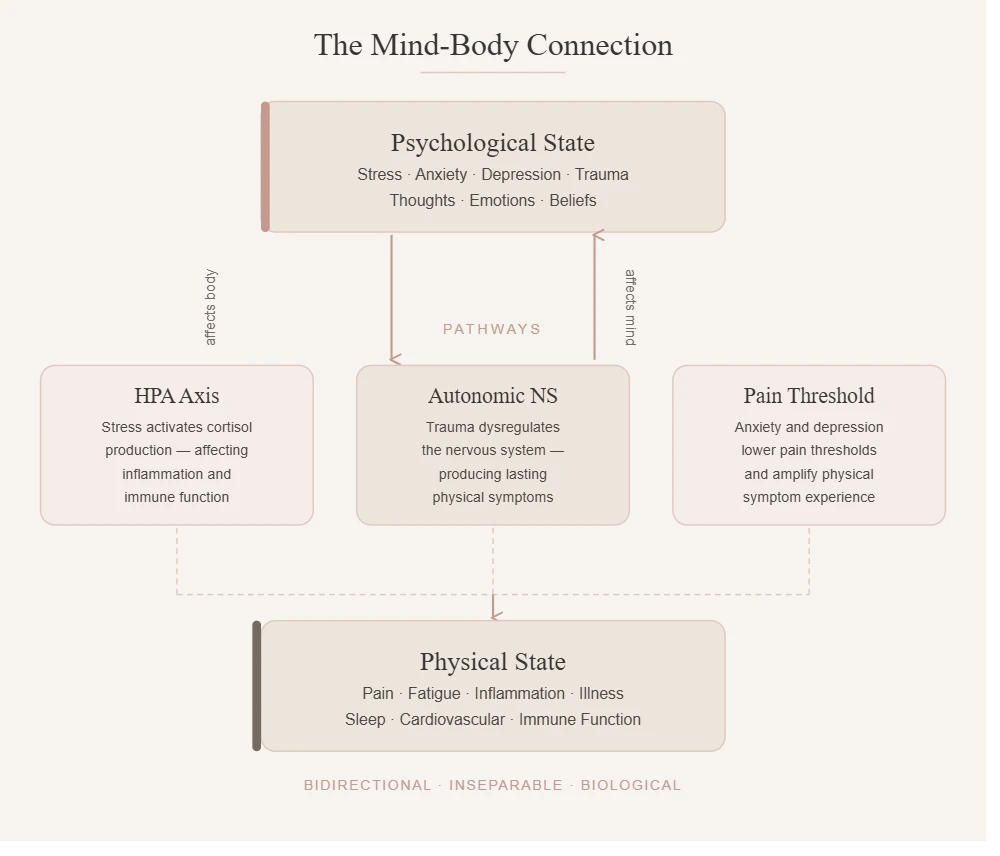
The separation of physical and psychological health is a clinical and cultural artifact — in reality they are inseparable. The brain and body are in constant bidirectional communication. Psychological states produce measurable physiological changes — and physiological states produce measurable psychological changes. This is not a metaphor. It is biology.
Chronic stress activates the hypothalamic-pituitary-adrenal axis, producing cortisol and other stress hormones that affect immune function, inflammation, cardiovascular health and pain sensitivity. Trauma dysregulates the autonomic nervous system in ways that produce lasting physical symptoms. Depression and anxiety lower pain thresholds and amplify the subjective experience of physical symptoms.
Understanding and working with this connection — rather than treating mind and body as separate — is at the core of effective treatment for somatoform disorders.
Treatment
Addressing the psychological factors that maintain physical distress.
Psychological treatment for somatoform disorders is evidence-based and highly effective. At Karasick Psychology we draw primarily from Cognitive Behavioural Therapy — addressing the thought patterns, attention processes and behaviours that maintain and amplify physical symptoms and the distress associated with them.
Biofeedback is a particularly powerful tool for somatoform conditions — providing real-time awareness of physiological states and developing the capacity to regulate the nervous system response that underlies many somatic symptoms. Treatment is collaborative and works alongside — not instead of — appropriate medical care.
Treatment does not aim to convince you that your symptoms are not real. They are real. The goal is to reduce the suffering and impairment associated with those symptoms by addressing the psychological factors that are maintaining and amplifying them.
What to expect
Treatment begins with a thorough assessment of your symptoms, their history and the psychological factors contributing to your distress. From there therapy is collaborative, evidence-based and tailored to your specific presentation and goals.